Bragança Highlights
- Bragança Castle
- Abade de Baçal Museum
- Montesinho Natural Park, one of Europe’s wildest regions.
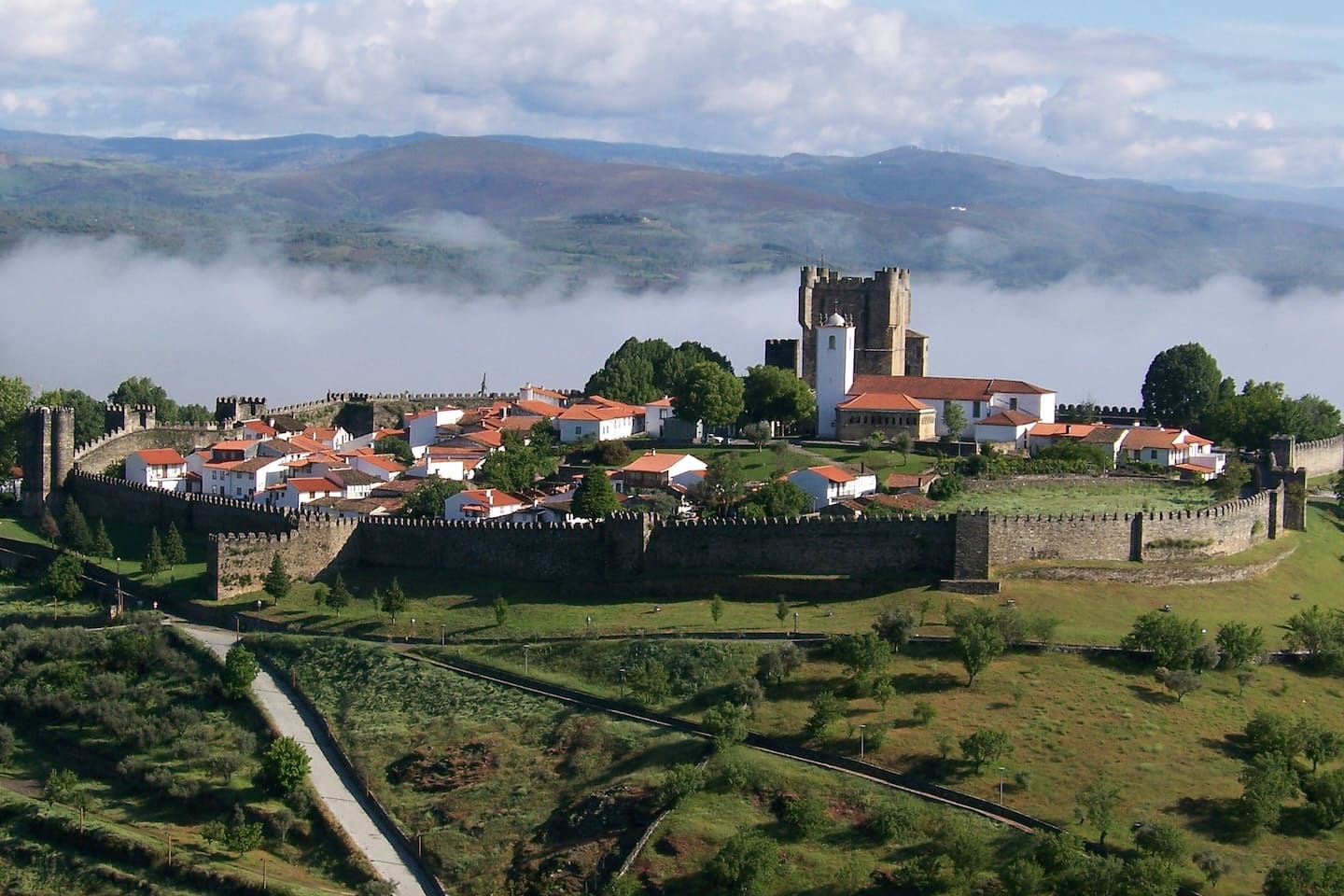
Surrounded by a long fortified wall, Bragança retains a well-preserved medieval center. It is the isolated capital of the province of Trás-os-Montes, an area known for its remoteness and antiquity.
Scattered around the province of Trás-os-Montes are some 200 “porcas” or “berrões,” granite pigs or boars dating from the Iron Age, some up to 2m (6ft) in length. Their intended purpose is not known, although most likely they were involved in fertility cults practiced by the local Celtic tribes. Many of them now decorate village squares, as is the case in Bragança, used as the base of a gothic pillory standing by the 12th-century castle. The 33m (108ft)-high castle keep contains a Military Museum displaying medieval suits of armor and weapons. Among the former residents of the castle was Dona Leonor, wife of Dom Jaime, Duke of Bragança, who imprisoned her inside on suspicion of adultery. He later had her murdered in the town of Vila Viçosa, and today one of the castle’s towers has the name of “Torre da Princesa,” or “Princess Tower,” in her honor.
The castle stands in the Old Town, a clutch of whitewashed houses, the 18th-century Church of Santa Maria (with a colorful painted ceiling depicting the Assumption of the Virgin), and the unusual 13th-century Domus Municipalis, probably the oldest town hall in Portugal and one of the few surviving Romanesque civic buildings in Europe.
To the north is the appealing Church of São Bento with a Moorish-style vaulted ceiling, and to the west is the Church of São Vicente, where Dom Pedro and Inês de Castro were secretly married in 1354 (see the Coimbra Tourism Guide for their tragic love story).
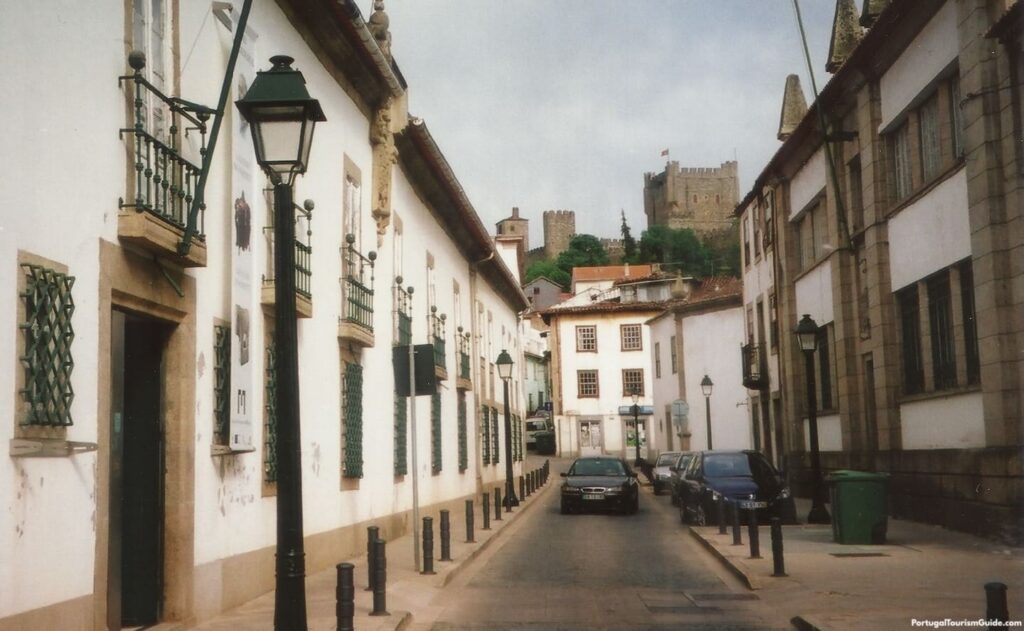
Nearby is the 16th-century Bishop’s Palace, now the distinguished Abade de Baçal Museum. Its collection includes Celtic art from the surrounding area, ancient stone porcas, tombstones, milestones, paintings, and local costumes.
The main square, Praça da Sé, is faced by the cathedral, built in the 1500s as a convent. Instead, it was a Jesuit school between 1562 and 1759, and became a cathedral in 1764. It features a baroque façade with a Renaissance doorway, while the interior presents a gilded altar and a sacristy with 17th-century paintings.
From the modern era there’s the Graça Morais Contemporary Art Center, in a 2008 building by Pritzker Prize architect Souto Moura. It hosts temporary exhibitions of national and international artists and has several rooms with a permanent collection of works by Graça Morais, one of Portugal’s most notable 20th-century artists.
Bragança makes a good base for visitors exploring the Montesinho Natural Park, one of the wildest regions in Europe. Time has stood still in this area, with many paths dating from the Visigothic empire (many of the villages such as Fresulfe and Sernande still bear distinctly Germanic names), and wolves, foxes, and golden eagles among the around 9,000 people scattered around small villages. The villages of Rio de Onor and Miranda do Douro on the border with Spain have been the subject of many anthropological studies and provide a fascinating insight into the local way of life. The people have developed their own dialects mixing Portuguese and Spanish, and ancient traditions still flourish such as the use of bagpipes in the folklore, Celtic associations similar to those of Scotland and Ireland.
Places to Visit Close to Bragança
Vila Real – A delightful baroque palace
Chaves – A spa town with a two-millenium-old Roman bridge